Data Analysis
The aim of this project is to analyze the relationship between weather conditions and Uber ride usage, especially during extreme weather conditions. The problem we address is whether weather conditions, ranging from subzero temperatures to scorching heat, influence the frequency of ride-sharing usage.
We used the following data for our analysis:
Hypothesis: Extreme weather conditions significantly affect the demand and geographic distribution of rides.
Null Hypothesis: Extreme weather conditions do not significantly impact ride demand or distribution.
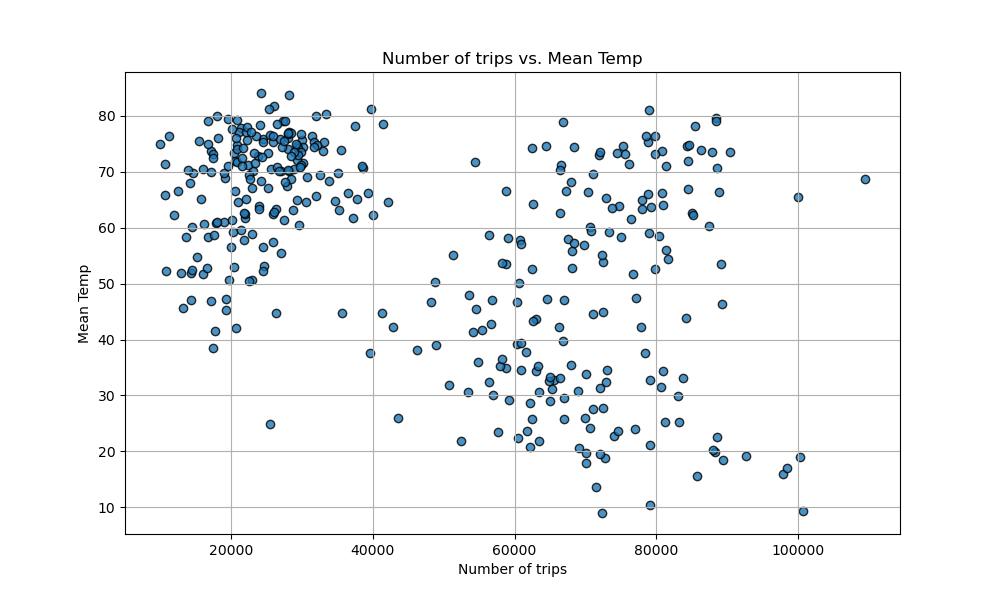
The strongest observed relationship was between temperature and number of trips—higher temperatures corresponded with fewer trips. Humidity and cloudiness had weaker, yet present, correlations.
Our analysis supports the hypothesis that extreme weather conditions significantly influence the demand for Uber and other FHV (For-Hire Vehicle) services in New York City. We observed a decrease in ride volume as temperatures increased, suggesting alternative transportation use or reduced travel during hotter weather.
These insights highlight business opportunities—ride-sharing companies can better align promotions and driver deployments with weather conditions to optimize engagement and efficiency.
However, the project was limited by dataset scope and availability. Future studies with broader and more complete data could provide even deeper insights into weather’s role in urban mobility.
In summary, weather is a meaningful factor in ride-share demand. Recognizing and responding to this can empower smarter urban transportation strategies.
Whether you'd like to collaborate, have a question, or just want to say hello — I’d love to hear from you!